Monday, October 30, 2017

2017, A Missed Year


2017 was a missed year for us as far as native orchids were concerned. I was in the hospital four times from March through August and did not really start feeling better until January of 2018.

Back on March 22 I went in to emergency at the local hospital with what I thought and the doctors first thought was appendicitis. An abdominal drain was put in to drain off the expected infection with an appendectomy scheduled several weeks later. The abdominal drain, however, produced no signs of infection but rather a kind of mucous and I was sent on to a specialist in Seattle who diagnosed the problem as mucinous neoplasms of the appendix, basically a tumor of the appendix that was producing a mucous-like substance that would in time strangle my organs and that could also have been cancerous. I had surgery on May 9 and had my appendix, part of my colon, gall bladder, omentum and peritoneum removed and was in the hospital recovering until May 24th (15 days). Thankfully, there were no signs of cancer.

While recovering from the surgery at home I ended up back in the hospital the end of June with blood clots in left leg and in my lungs. After spending several days in the hospital and being prescribed blood thinners I was sent home again and began the recovery from that problem.

Then the beginning of August I was back in the hospital, first in Bellingham and then after being transferred, in Seattle, this time for an obstructed bowel, the result of scar tissue. That stay lasted a week before the obstruction cleared and again I was sent home and have been home since gradually regaining my strength.

As a result of the surgeries and lengthy recovery I retired and we moved to Spokane, Washington, to be near our handicapped son.

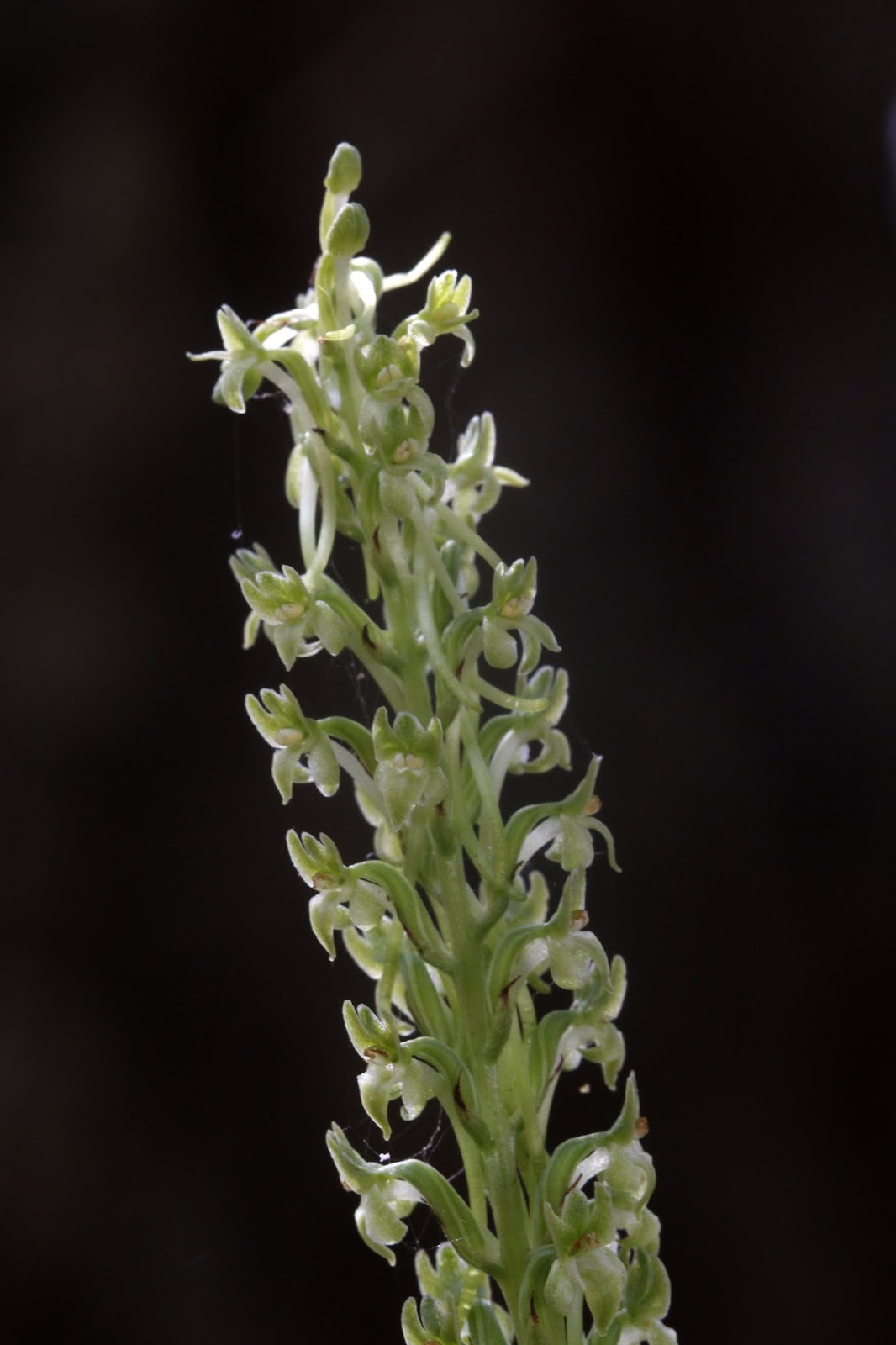
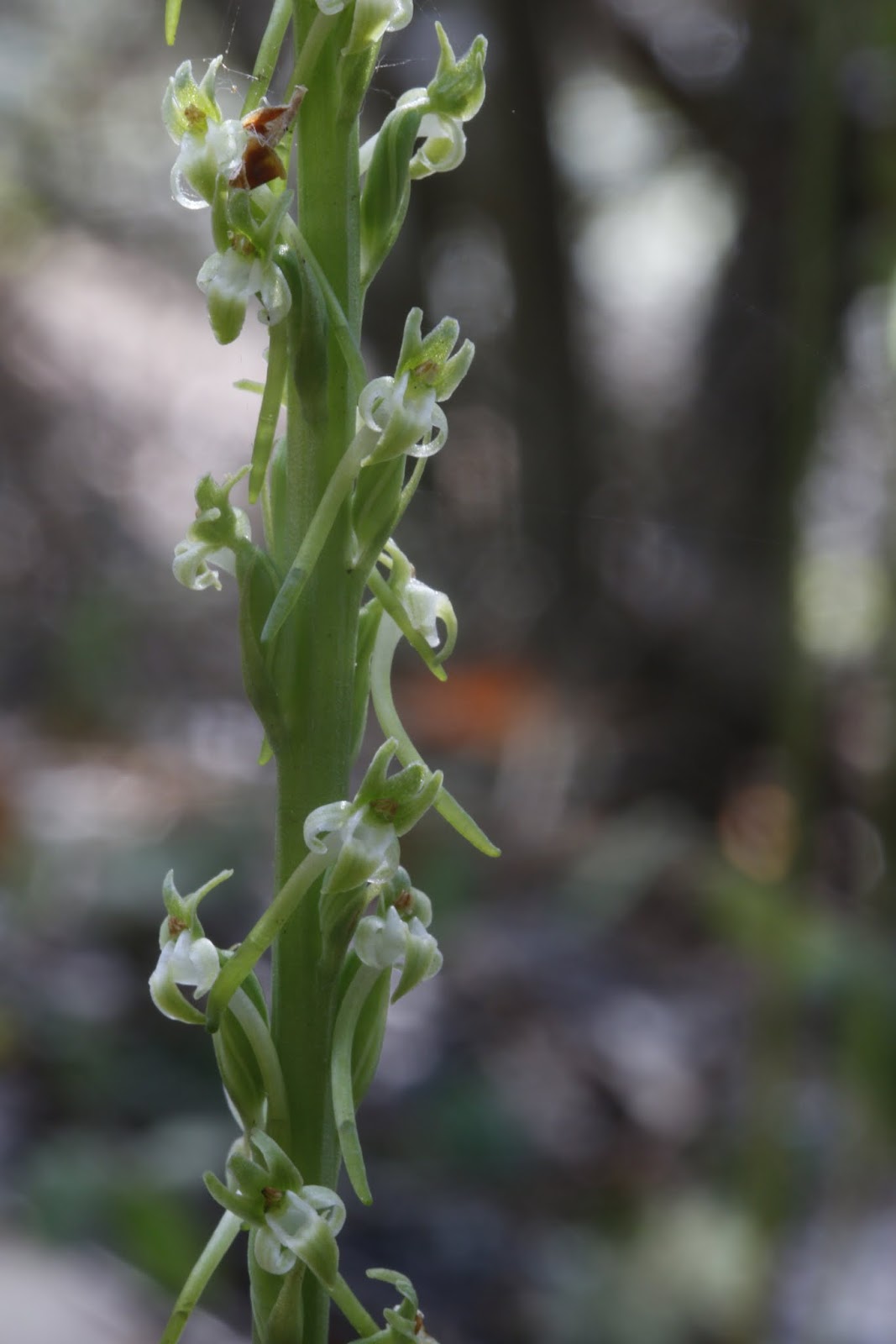
The only native orchids I photographed in 2017 were a couple of orchids in Hyalite Canyon, Montana, and Yellowstone National Park.  We went on a family vacation to the Black Hills in July while I was recovering from surgery and bloodclots and we took two of our grandchildren back to Washington with us for the rest of the summer, stopping in the area of Bozeman, Montana, for a few days.  My father grew up in that area.  We also went on to Yellowstone National Park with them before heading to Washington and I photographed a few orchids in both places.

Hyalite Canyon, Montana

Platanthera dilatata var. albiflora (White Bog Orchid)

Yellowstone National Park

Platanthera dilatata var. albiflora (White Bog Orchid)


Platanthera x estesii (Estes' Hybrid Bog Orchid)

Platanthera stricta (Slender Bog Orchid)

Piperia (Platanthera) unalascensis (Alaskan Piperia)

Spiranthes romanzoffiana (Hooded Ladies' Tresses)


Tuesday, September 6, 2016

The End of Another Season


Our 2016 native orchid season was considerably abbreviated by a trip to Australia, so we saw only a limited number of the species we usually visit and did not accomplish much of what we had intended for the season.  The high point was finding in Washington a species we had seen elsewhere but not in the state, Listera or Neottia borealis, the Northern Twayblade.  True to its name we found it in the northernmost parts of the state.


We also looked for and found again some rarities, particularly the natural hybrid of the two varieties of Fairy Slippers, the Eastern and Western Fairy Slippers, Kostiuk's Hybrid Fairy Slipper, Calypso bulbosa x kostiukiae, and the white form of the Western Fairy Slipper, Calypso bulbosa var. occidentalis fma. nivea.  Both of these were growing where we had found them previously and seemed well established in those locations.


We found some new sites for the Western Fairy Slipper and for the Early Coralroot, Corallorhiza trifida, the latter especially important since it is not common in the state of Washington.  These sites were on both sides of the Cascades and proof that the species is adaptable and quite widely distributed, though it is here near the southern end of its range, being much more common as one moves to the north. 


We missed a lot of species, however, and will have to look for some of them next year.  As always are plans are to look for new locations and to find in the state of Washington the species we have not yet seen there, especially Dactylorhiza viride var. virescens, the Long-bracted Green Orchis, and Platanthera obtusata var. obtusata, the Blunt-leaved Rein Orchis, and we have locations for both within the state.

Monday, August 8, 2016

An Alien Species in Larrabee State Park


Friday, August 5, I visited Larrabee State Park south of Bellingham to see how the Broad-leaved Helleborines were doing.  Due, I suspect, to the dry summer we've had some were already finished and others were just starting to bloom and in one location there were very few to found, though they are usually abundant in that location.  Epipactis is not a New World native but comes from Europe.  It has, however, established itself across the USA and Canada.  Here are the photos I was able to take. 


Monday, August 1, 2016

Three Piperias and a Goodyera at Deception Pass


Saturday, July 30, I was down on Whidbey Island at Deception Pass State Park to look for several orchids there.  I found three Platantheras (formerly Piperias) and one Goodyera in bloom.  Goodyera oblongifolia, the Giant Rattlesnake Orchis, was just starting to bloom.  The three Platantheras were at different stages of their bloom seasons.  Platanthera elegans, the Elegant Piperia, was nearly finished.  Platanthera transversa, the Flat-spurred Piperia, was still good but past its prime, and Plaatanthera elongata, the Long-spurred Piperia was at the peak of its bloom.  The latter species was also more abundant than usual, with hundreds of plants and several large colonies.  It should be noted that all the Piperias are now reclassified as Platantheras, though I prefer the old names since they are so distinctive.

Giant Rattlesnake Orchis
Goodyera oblongifolia


Elegant Piperia
Platanthera elegans


Flat-spurred Piperia
Platanthera transversa


Long-spurred Piperia
Platanthera elongata