Three rather brief excursions this week, the first to Lake Elizabeth in the North Cascades near Skykomish, Washington. This is a favorite place for native orchids, but the trip was somewhat disappointing, probably because the season has been early and the summer very dry. Not only were there only a few species and those sparse, but many of the plants had aphids, almost certainly due to the dry weather.
I found
Neottia banksiana (
caurina), the Northwestern Twayblade and
Neottia cordata var. nephrophylla, the Western Heart-leaved Twayblade, the former still in bloom but the latter nearly finished and not very many plants of either species, far fewer than previous years, especially of
Neottia cordata. Nor did I not find any of the purple-flowered form of that species,
Neottia cordata var. nephrophylla, fma. rubescens.
Neottia banksiana
Neottia cordata var. nephrophylla
There were two Bog Orchids blooming,
Platanthera dilatata var. dilatata, the Tall White Northern Bog Orchis, and
Platanthera stricta, the Slender Bog Orchis. Notably missing were both
Platanthera huronensis, the Green Bog Orchis, and
Platanthera aquilonis, the Northern Green Bog Orchis, both of which we've found there previously. Also missing was
Platanthera dilatata var. leuchostachys with its very long spur.
Platanthera dilatata var. dilatata
Platanthera stricta
I did find
Spiranthes romanzoffiana, the Hodded Ladies'-tresses, but they are a later bloomer and were only just beginning to put up flower spikes. They too appeared to be fewer in number than last year, though I may have missed them hidden in the sedges and grasses. I also found a couple plants of the Western Coralroot,
Corallorhiza mertensiana, but they were nearly finished and again there were only a few plants to be found.
Later in the week I was able to make a second trip to a location near Seattle and to two locations in Larrabee State Park in the Chuckanut Mountains south of Bellingham. I was looking for
Epipactis helleborine, the Broad-leaved Helleborine, a non-native and for the white form of this species especially. I found the species in all the places I looked but could not find the white (
alba) form, though I was told it was there to be found. I did find the green form,
fma. viridens.
Epipactis helleborine fma. viridens
While looking for the
Epipactis in Larrabee, I also found a few plants of
Platanthera (Piperia) elegans, the Elegant Piperia near the coast. They were quite small, only a foot tall (30 cm). This species can grow to three feet (100 cm) tall, but their exposed location, I am sure, explains their small size. They are, in my opinion, the most beautiful of the Piperias. That was a reminder to me to look for the other
Platantheras (Piperias) which bloom about the same time.
That I did with my wife on Saturday on our way to a picnic. We left early and explored Goose Rock near Deception Pass and found three species of
Platanthera (Piperia) blooming there,
Platanthera (Piperia) elegans ssp. elegans, the Elegant Piperia,
Platanthera (Piperia) transvera, the Flat-spurred Piperia, with its horizontal spur, and
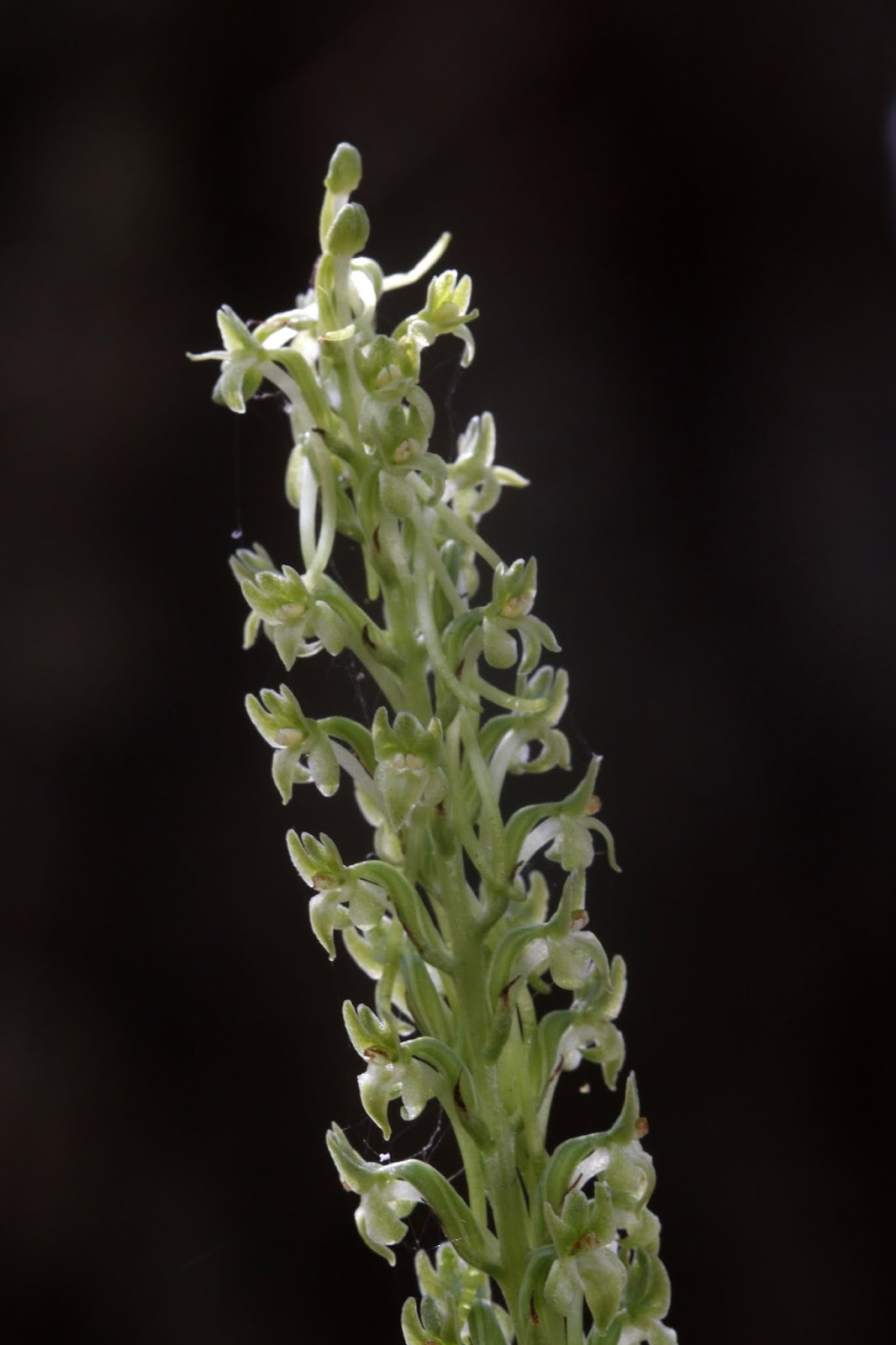
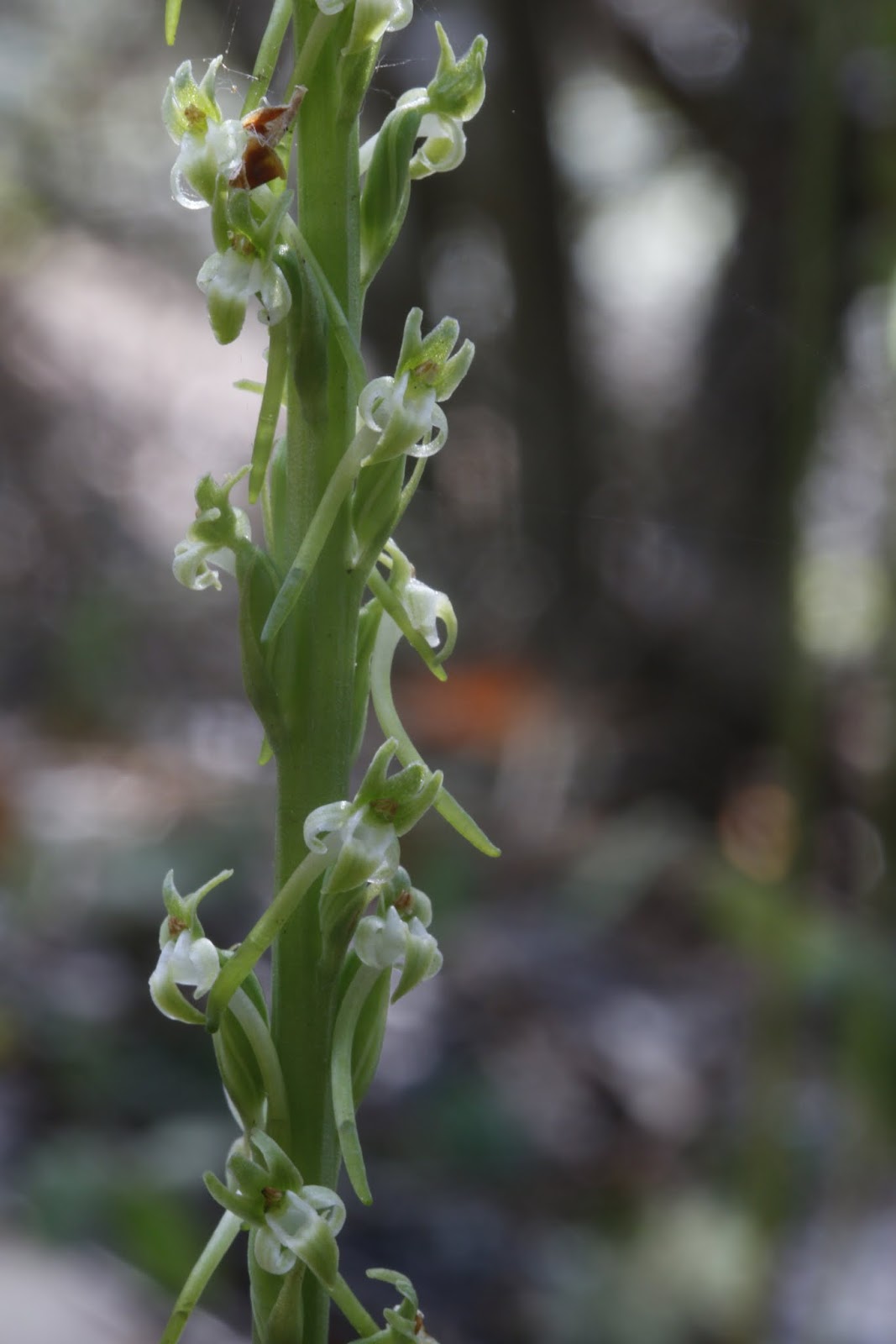
Platanthera (Piperia) elongata with its tiny green flowers and long, curved spur.
Platanthera (Piperia) elegans was a bit past its peak, but the other two species were in good form.
Platanthera (Piperia) elegans ssp. elegans
Platanthera (Piperia) elongata
Platanthera (Piperia) transversa
Along with the
Piperias, the ubiquitous
Goodyera oblongifolia, the Giant Rattlesnake Orchis, was beginning to bloom. This species is everywhere in the northwest and we rarely hike anywhere without seeing its leaves, and later in the summer its flowers. Its name is a bit misleading since the plant is only a foot tall (30 cm), but in comparison to the Lesser Rattlesnake Orchis,
Goodyera repens, it is quite large. It is everywhere at Goose Rock.