Washington Park lies on a rocky outcrop of Fidalgo Island and is a city park under the jurisdiction of Anacortes, the only city on Fidalgo Island. One would not expect a city park to be a good place to find orchids, but this park, though heavily used is large enough (220 acres) and wild enough to support a wonderful variety of wildlife and wildflowers including numerous wild orchids.
We have found five different orchid species there that bloom over an extended period from April until August in the many trips we have made there. The park includes a two-mile drive and we usually walk the road looking for orchids in the clearings along the road, but we also walk the many trails along the cliffs. The different orchid species we have found in this wonderful park are:
Calypso bulbosa var. occidentalis, the Western Fairy Slipper
We've found not only the normal form but the white form as well,
forma nivea, and Washington Park is the only place we've ever found this rare form. These bloom in abundance in the park around the end of April.
Corallorhiza maculata var. occidentalis, the Western Spotted Coralroot
This begins to bloom in the park as the Fairy Slippers are fading and is almost always the brown stemmed form,
forma intermedia. The unspotted yellow form of this species is also found in the park.
Corallorhiza mertensiana, the Western Coralroot
This also begins to bloom as the Fairy Slippers are fading but does not bloom over as long a period as the Western Spotted Coralroot. The park, however, has the darkest forms we've seen of this species.
Goodyera oblongifolia, the Giant Rattlesnake Orchis
This fills the gap between the Coralroots and the last of the five species. It blooms most of the summer and is by far the most common orchid in the park. It is notable for its beautifully patterned leaves as well.
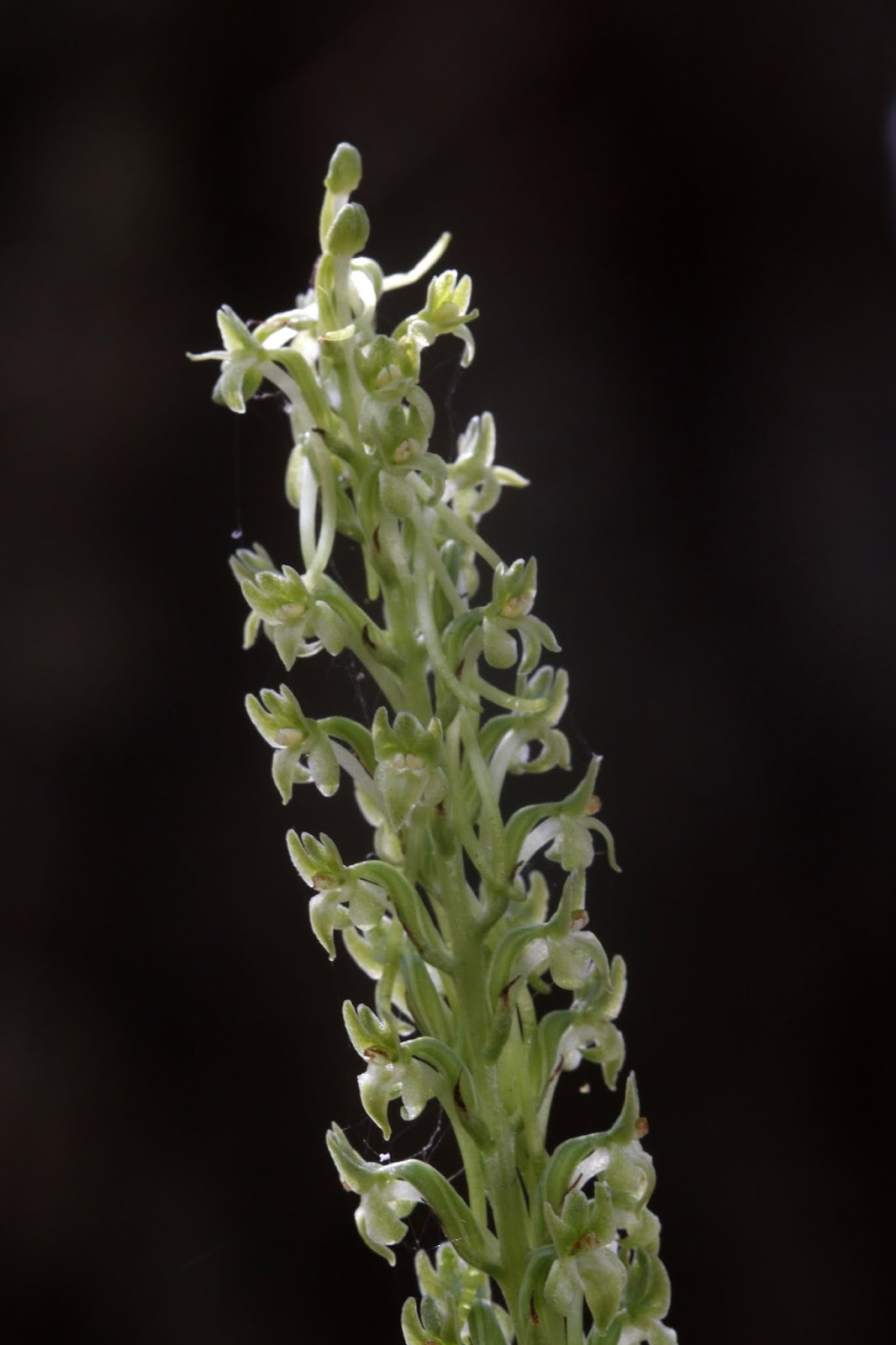
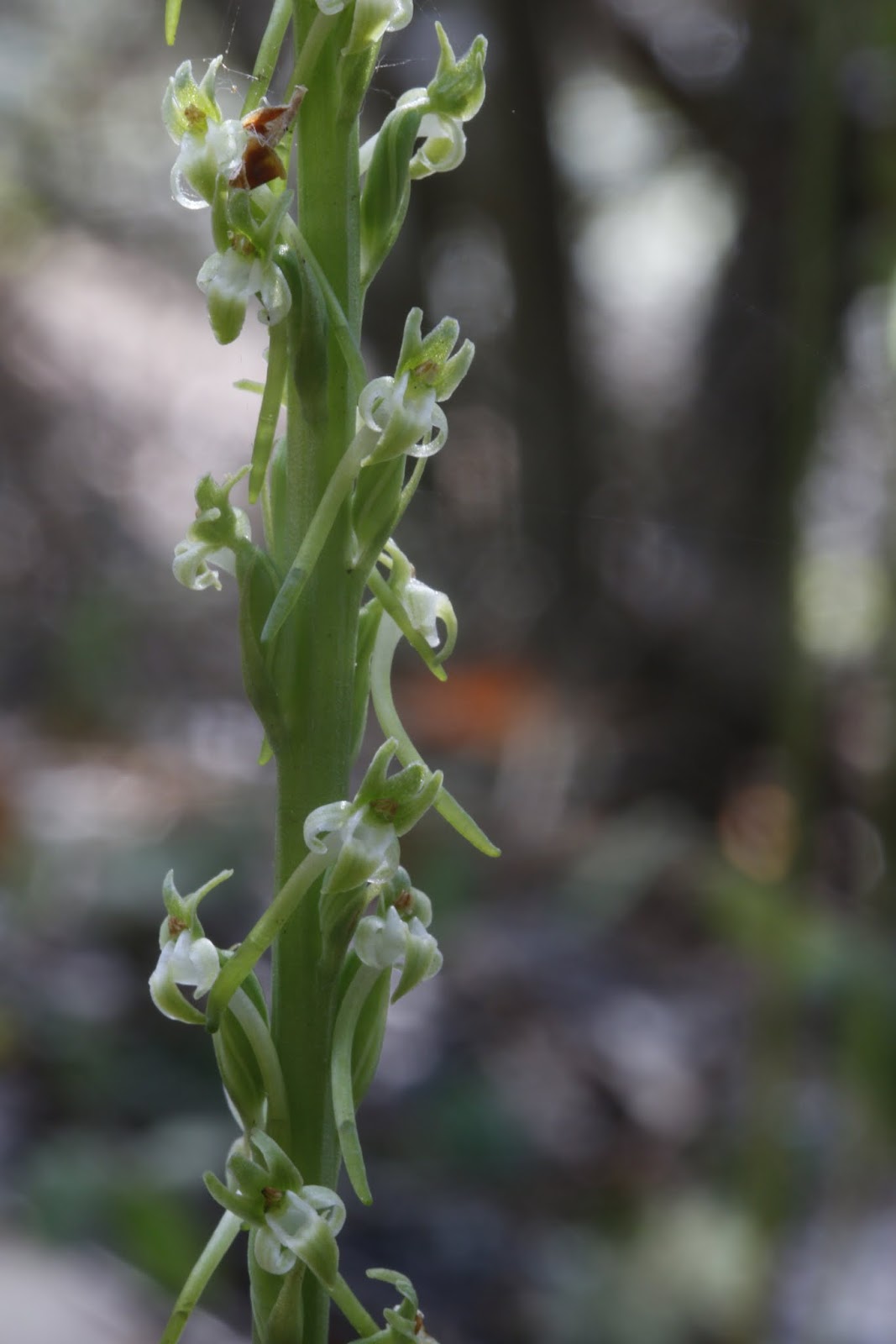
Platanthera transversa, the Flat-spurred Piperia
This is the last of the park's orchids to bloom, blooming after everything is nearly finished. We see its leaves in the spring but when it blooms the leaves are gone. It also is quite abundant in certain areas,